A real time digital twin
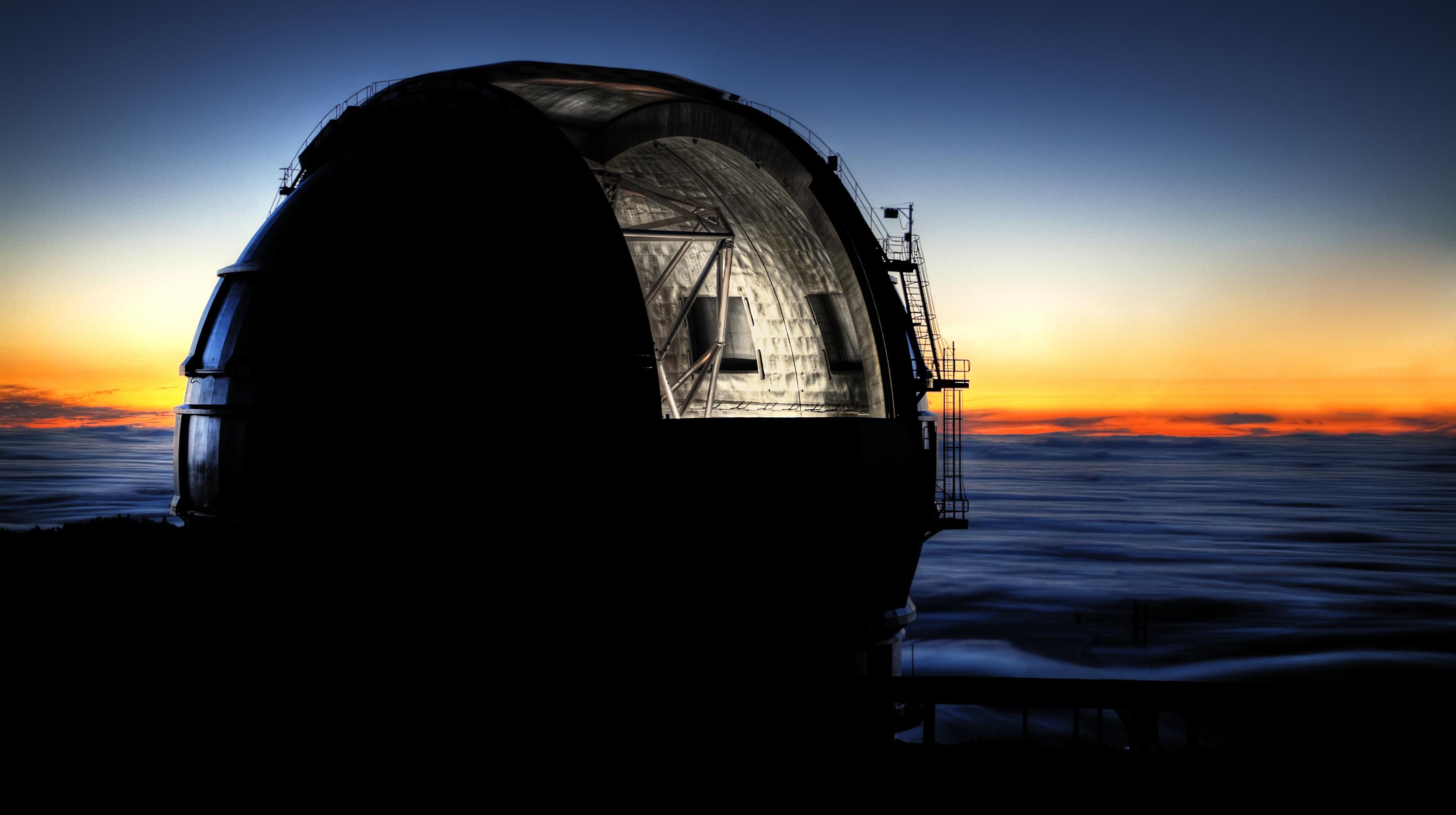
Situated on the island of La Palma in the Canary Islands, Gran Telescopio Canarias, or GRANTECAN is the largest optical telescope of the world, where scientists observe the sky to further our knowledge of the universe.
Astrophysicist and GRANTECAN Director Romano Corradi has been steering the digital transformation of GRANTECAN.
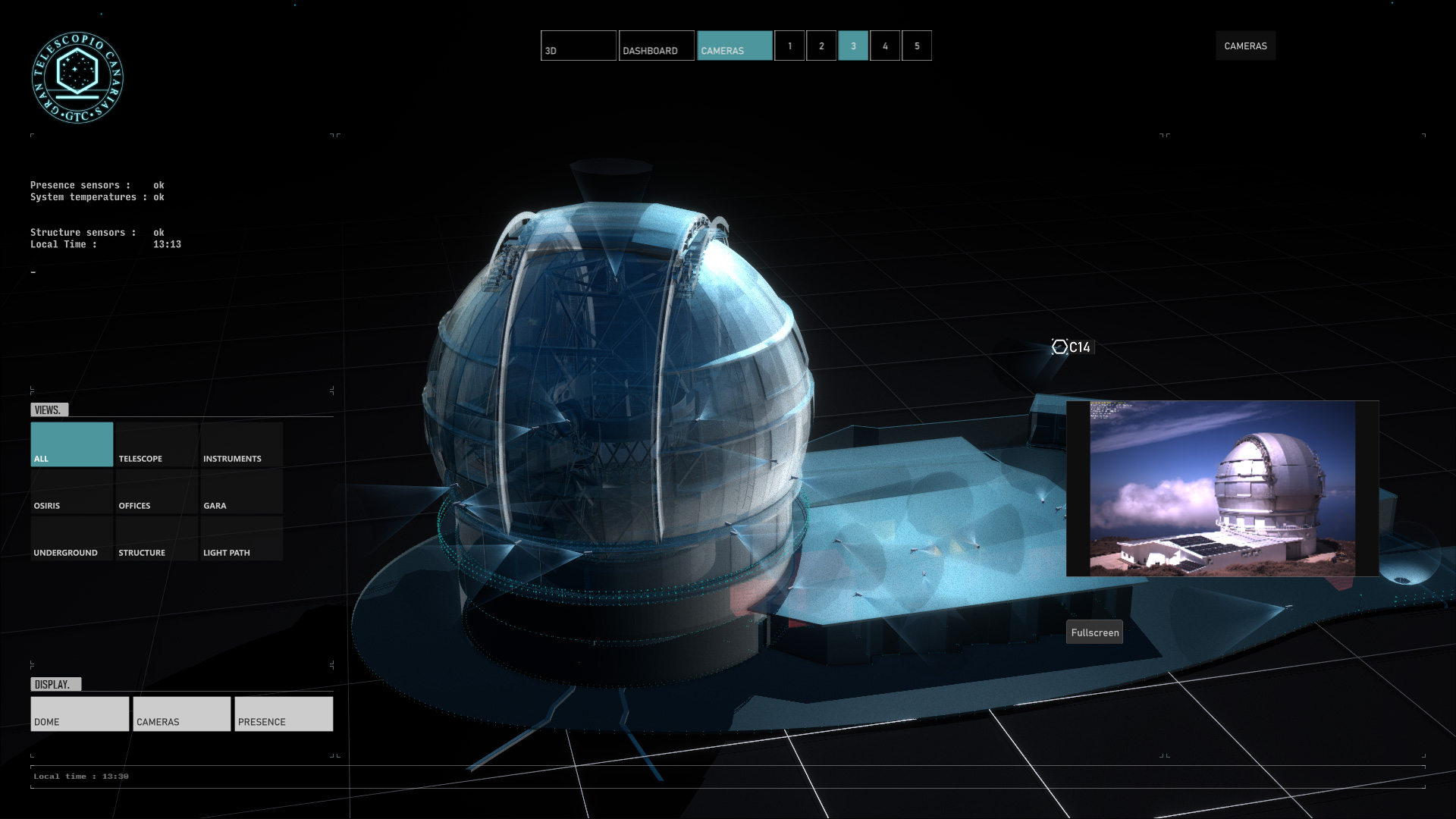
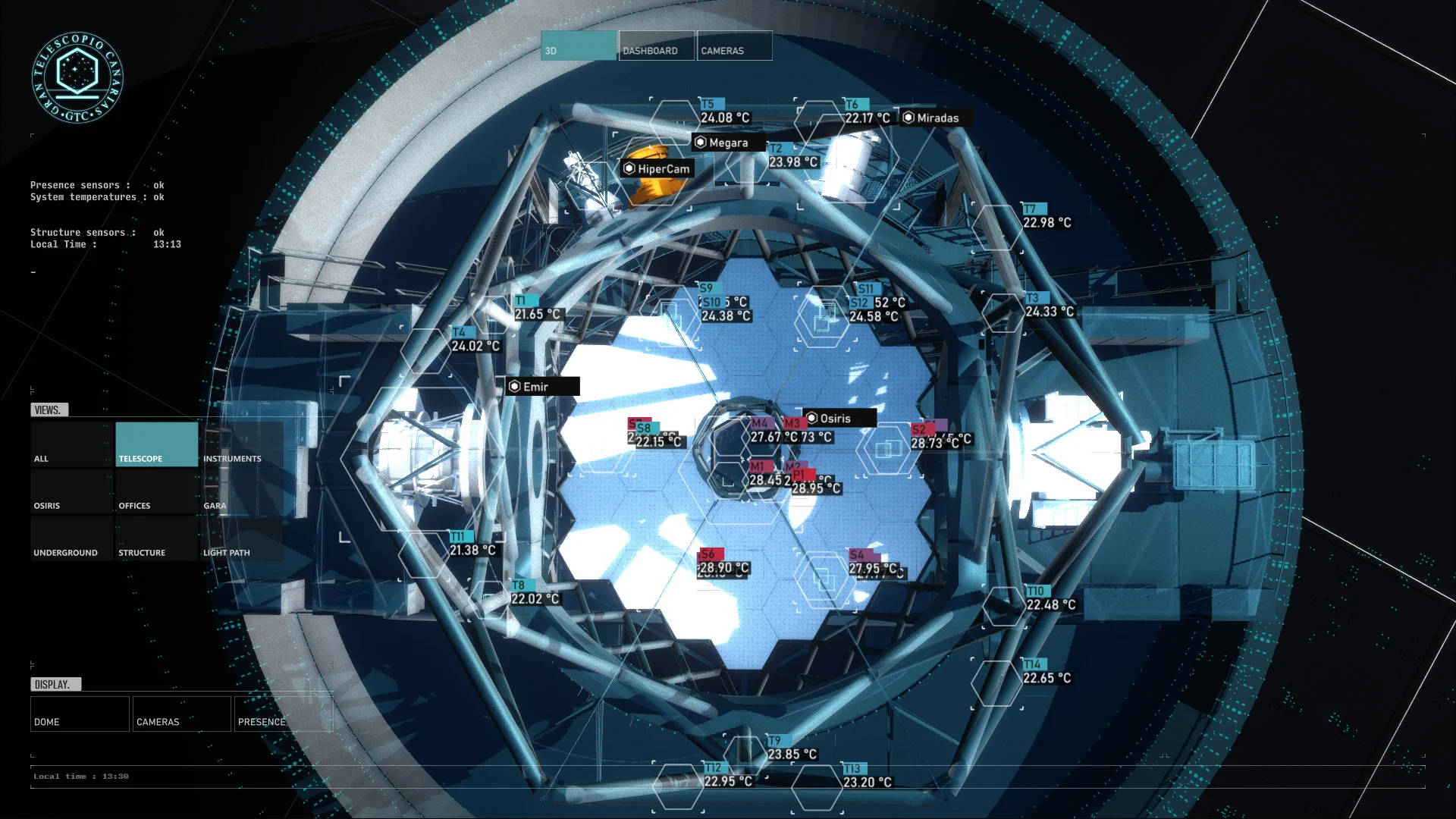
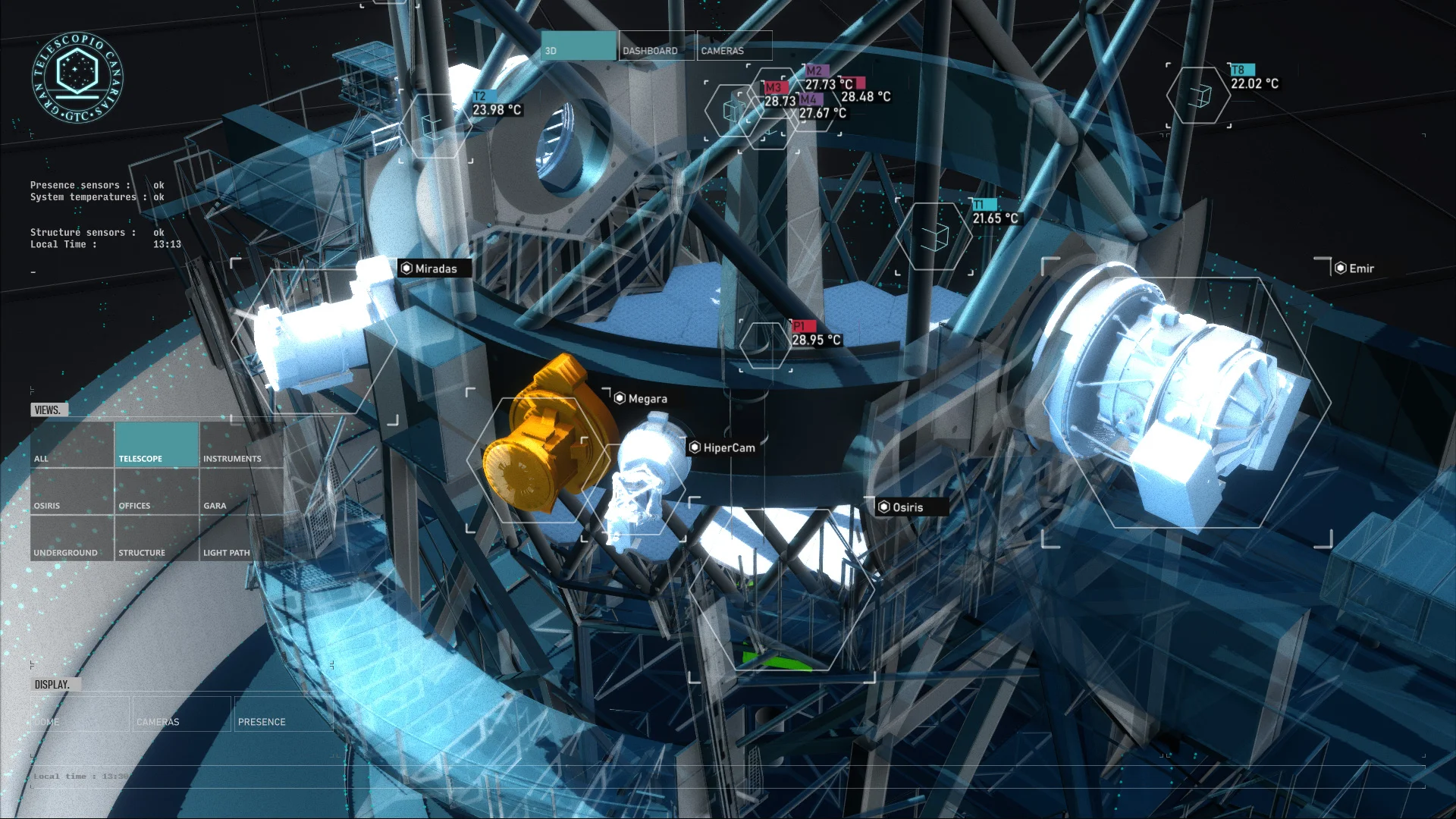
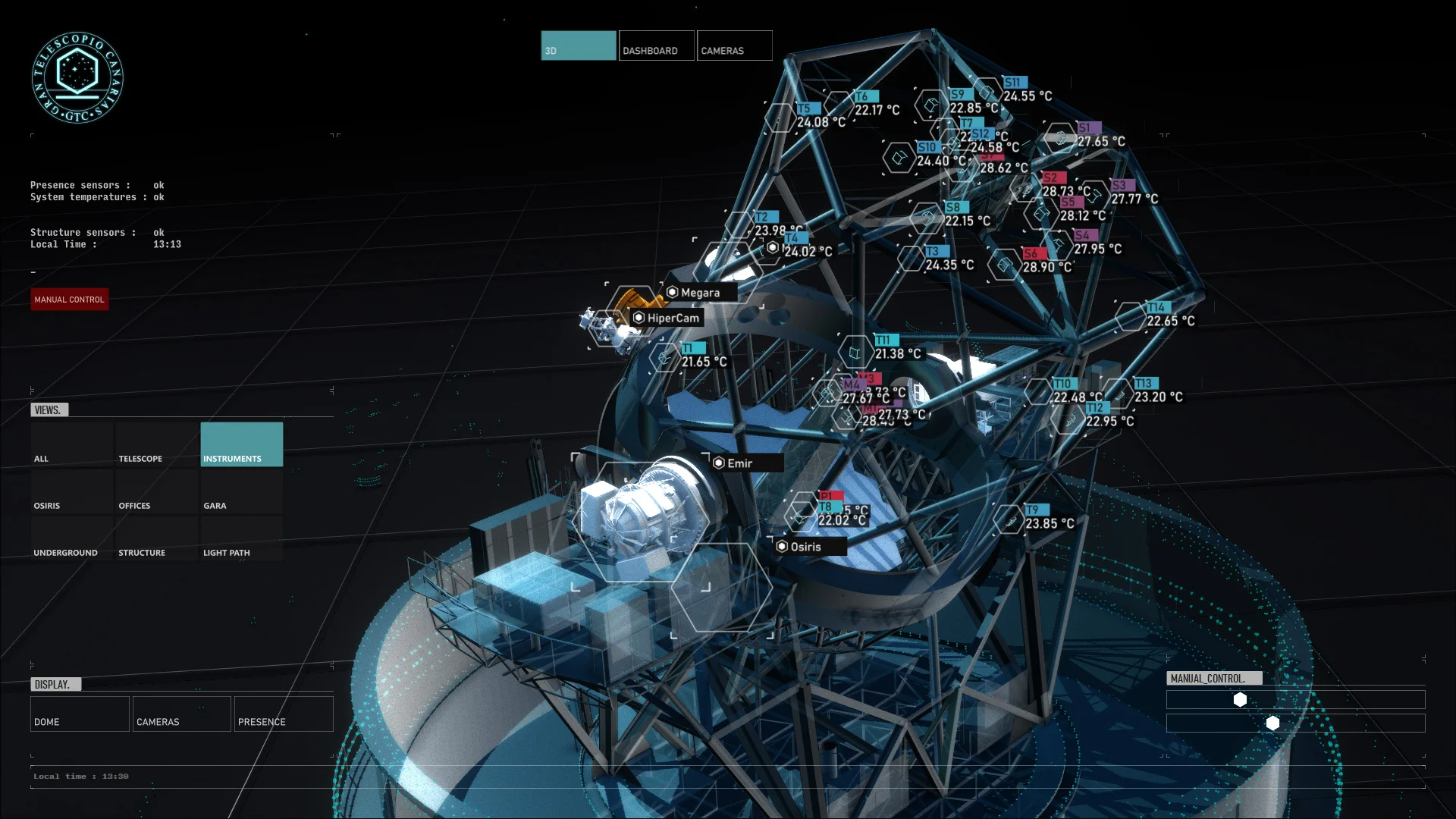
Building a functional virtual replica or “digital twin” of the telescope enabled real data to be fed into, processed and analyzed by the digital twin to inform the facility’s actual operation, maintenance, and development while providing another layer of safety to the operational staff.
For this undertaking Romano elected to work with TouchDesigner “knowing its versatility to treat nearly any kind of data, wide interoperability, and its capability to provide real-time rendered 3D models”. I was privileged enough to be part of the team, together with Romano and y=f(x)'s Roy, Tim Gerritsen and Rogier van Ostaijen.
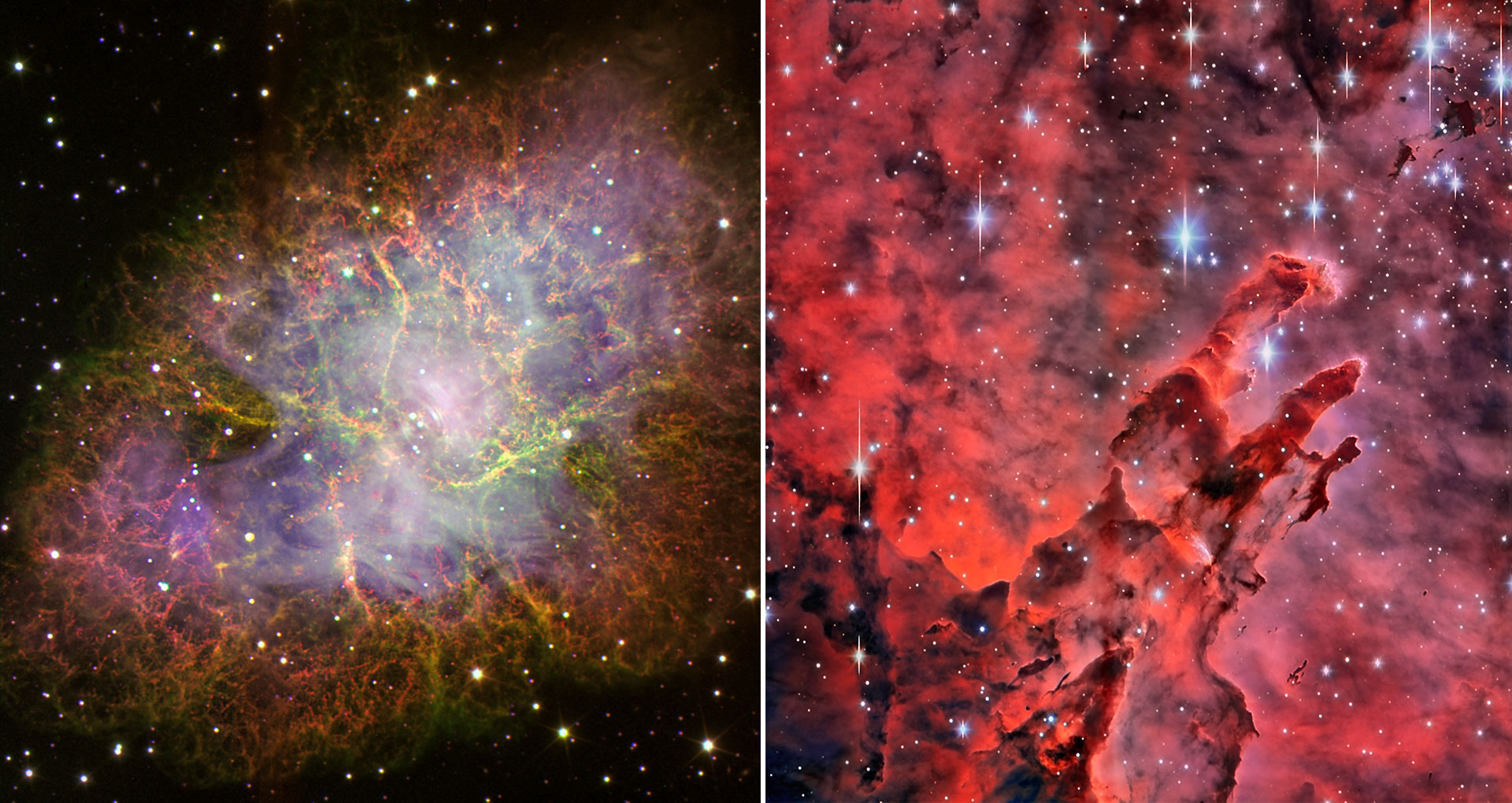
Science at the Grantecan
I was invited to assist in developing and designing part of the system architecture that makes it possible to monitor, visualize and track the data from the impressive telescope in La Palma, Spain.
The integration of all the data points that Grantecan has to offer presented a technical challenge we were keen to take since solving it implied the creation of a system that could be scalable and forced us to design a robust strategy that could be later adapted and expanded.
With lots of data involved, things could easily get too messy and overwhelming. So, we decided to create a 3D environment that shows everything in real time. The centerpiece is a detailed model of the telescope.
Further reading
Please refer to this article by Isabelle Rousset, from Derivative/TouchDesigner, for in-depth information about this exciting project.